







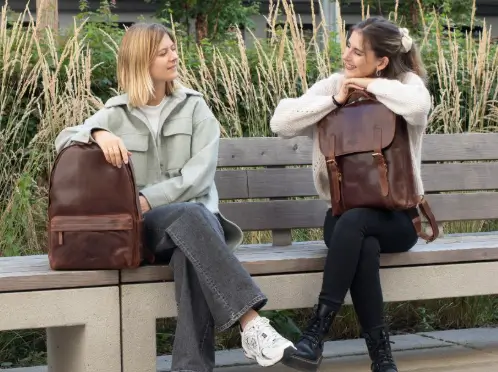
There’s a reason leather backpacks have moved from purely functional travel gear into everyday fashion staples. They free up your hands, distribute weight more evenly across your shoulders, and still manage to look polished enough for the office or a dinner out. For anyone juggling a busy schedule, that combination of comfort and style is hard to beat.
The Practical Case for Backpacks
Unlike a handheld bag, a backpack lets you move through crowded stations, navigate stairs, or catch a train without constantly adjusting your grip. The even weight distribution also matters more than people realize; carrying a heavy bag on one shoulder for years can contribute to posture issues, while a well-designed backpack spreads that load across your back and core.
Storage is another major advantage. Multiple compartments mean your laptop, notebook, and personal items each have a dedicated spot, reducing the chaos of digging through a single cavernous interior. Padded sections protect electronics from bumps, while smaller pockets keep frequently used items like transit cards or lip balm within easy reach.
See also: Renters Insurance Michigan: Protecting Your Peace of Mind
Why Leather Specifically
Leather backpacks strike a particular balance that synthetic materials struggle to match. The material is naturally water-resistant to light rain, structurally rigid enough to hold its shape even half-empty, and develops character with use rather than looking worn out. A canvas backpack might show stains permanently, while leather often just deepens in tone.
There’s also a professional undertone to leather that nylon rarely achieves. Walking into a client meeting or an interview with a well-kept leather backpack reads as put-together in a way that a sporty synthetic pack usually doesn’t.
Sizing and Silhouette Considerations
Backpacks generally fall into three categories: mini backpacks for essentials-only days, mid-size for daily commuting with a tablet or light laptop, and larger structured versions for full workdays or short trips. Picking the right size prevents both the annoyance of an overstuffed bag and the awkwardness of a nearly empty one flopping against your back.
Strap adjustability deserves attention too. A backpack that sits too low pulls uncomfortably on your shoulders, while one that’s too high restricts arm movement. Trying a bag on with roughly the weight you’ll actually carry gives a far more accurate sense of fit than assessing it empty in a store.
If you’re comparing options built specifically with these proportions and materials in mind, this leather backpacks range is a solid starting point, offering structured silhouettes designed for daily rotation.
Maintaining Leather Over Time
Leather needs conditioning every few months, particularly in drier climates where the material can crack if neglected. Wipe down the exterior with a slightly damp cloth after exposure to dust or light rain, and avoid storing the bag in humid or overly warm spaces that accelerate deterioration.
Wrapping Up
A well-chosen leather backpack isn’t just a practical solution for carrying your belongings; it’s a long-term investment piece that adapts to work, travel, and everyday errands without looking out of place in any setting.
FAQs
Q: Are leather backpacks heavier than synthetic ones?
A: Slightly, but the difference is usually a few hundred grams, and the improved structure often makes the bag feel more comfortable despite the extra weight.
Q: Can leather backpacks fit a 15-inch laptop?
A: Most mid-size and larger leather backpacks include a padded sleeve designed for 13 to 15-inch laptops; always check the product dimensions to confirm.
Q: How often should leather backpacks be conditioned?
A: Every three to four months under normal use, or more frequently in dry or sunny climates.